
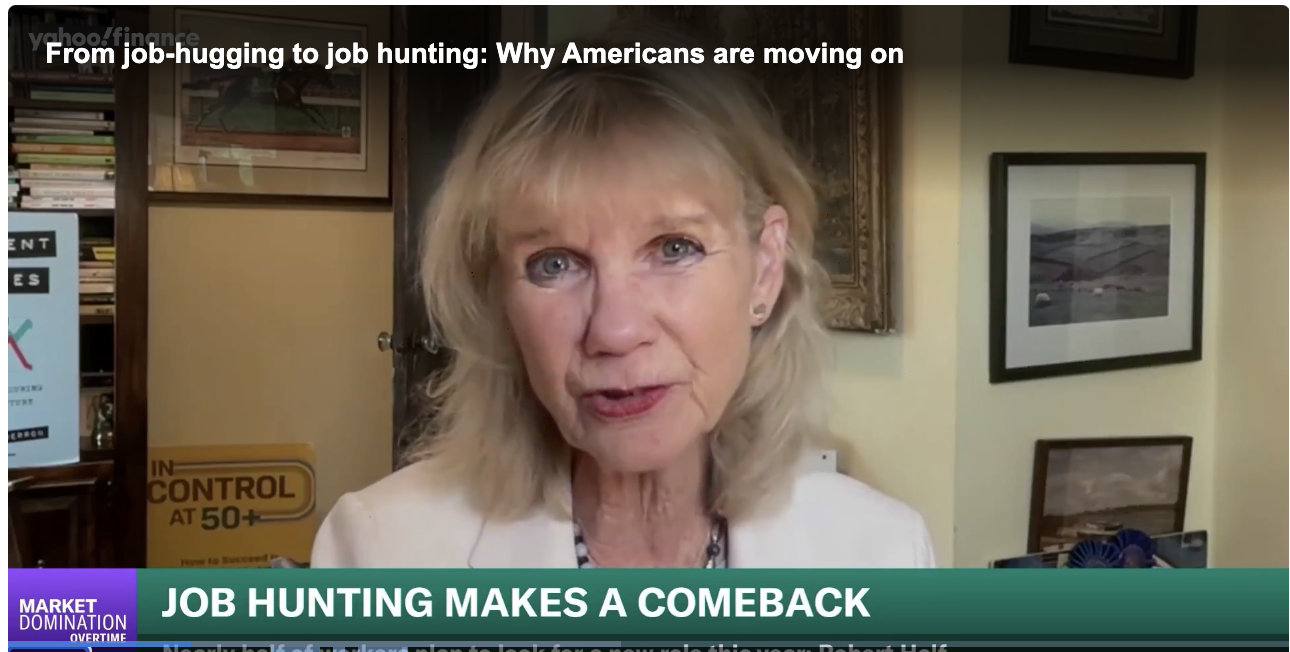
Nearly half of US workers plan to look for a new position in the next six months, up from 38% in the first half of 2026 and 27% one year ago, according to a survey from hiring firm Robert Half out this week.
Are workers stretching their limbs again after several years of “job hugging”?
“This feels like a reset moment on both sides,” Dawn Fay, operational president of Robert Half, told Yahoo Finance. “People are taking a step back and asking whether their current role still lines up with where they want to go.”
This isn’t a one-sided shift.
“There’s also a market dynamic at play,” she said. “Companies are hiring a bit more as business picks up, and some are also realizing AI hasn’t been quite as productive as they initially expected and need to fill skill gaps.
“That bit of activity is giving workers more confidence to explore.”
Some evidence of that trend: Nearly 6 in 10 human resource executives plan to increase their companies’ hiring over the next six months, according to the latest survey from the Conference Board, the strongest outlook in three years.
Who is preparing to make a move?
More than half of those job switchers are eyeing new positions in the healthcare field, followed by technology and marketing roles, according to the Robert Half report.
And those itching to move on are mostly Gen Zers and millennials. Only 2 in 10 boomers, for instance, expressed interest in changing employers, compared to more than 5 in 10 who are 45 or younger.
The motivation to jump ship: better benefits and perks (47%), career advancement opportunities (43%), remote work options (39%), higher salary (35%), and feeling burned out (26%).
The emerging bright spots
Recent data has consistently shown an improvement in the labor market since late last year, when there was a dearth of open jobs.
In May, the economy added 172,000 jobs, the third straight month of job gains above 100,000. A private payrolls report from ADP found that 122,000 private sector jobs were added last month.
Other dynamics in the shifting labor market are boosting workers’ confidence.
“The labor market has been in a job-hugging phase where employees are staying put not because they’re satisfied, but because uncertainty makes moving feel risky,” Ruth Thomas, chief compensation strategist at Payscale, told Yahoo Finance. “We’re seeing this start to shift.”
In white-collar, knowledge-based roles where skills are evolving quickly, external pay is beginning to outpace internal salary progression, according to Thomas.
On average, new hires with the right skill set earn 3.6% more than tenured employees, per a new Payscale report out this week.
Pay transparency laws mean job seekers can “see what similar roles are paying externally, what new hires are making, and where the market is pricing their skills,” Thomas added.
The top 10 roles with the greatest upside for job seekers are in marketing operations, project management, compliance, quality control, and risk analysis, according to the Payscale data.
And it may pay to think small.
“For job seekers, there’s real opportunity with small businesses right now,” Fay said. “Many smaller teams are focused on closing skill gaps and keeping work moving. That often translates into stepping into a role where you can make an impact quickly, take on a broader range of responsibilities, and grow alongside the business.”
Hiring still lags pre-pandemic levels
While that’s all good news, not everyone is lauding a new day yet.
“Overall hiring demand has essentially returned to where it stood in early 2020,” with Indeed job postings roughly even with pre-pandemic levels, according to a recent report.
“Job seekers do seem more engaged in their search as we head into the second half of the year, but they’re entering a labor market with mixed opportunities,” said Cory Stahle, Indeed’s senior economist.
“Healthcare and skilled-work roles have held up well, and we’re seeing a slight rebound in tech hiring, though overall hiring remains near the lowest levels we’ve seen since 2013.”
Thomas agreed: “It’s still a cautious market. Hiring timelines are longer, competition for roles is real, and employers hold more leverage than they did even two or three years ago. But the market isn’t completely frozen.”
Sign up for the Mind Your Money newsletter
Read the latest financial and business news from Yahoo Finance
