
You might not have a choice. Living to 100 is no longer an anomaly. The number of Americans ages 100 and older is projected to more than quadruple over the next three decades, from an estimated 101,000 in 2024 to about 422,000 in 2054, according to the US Census Bureau.
Longer lifespans are here, and author Michael Clinton spells out the implications of this fundamental demographic shift in his new book, “Longevity Nation: The People, Ideas, and Trends Changing the Second Half of Our Lives.”
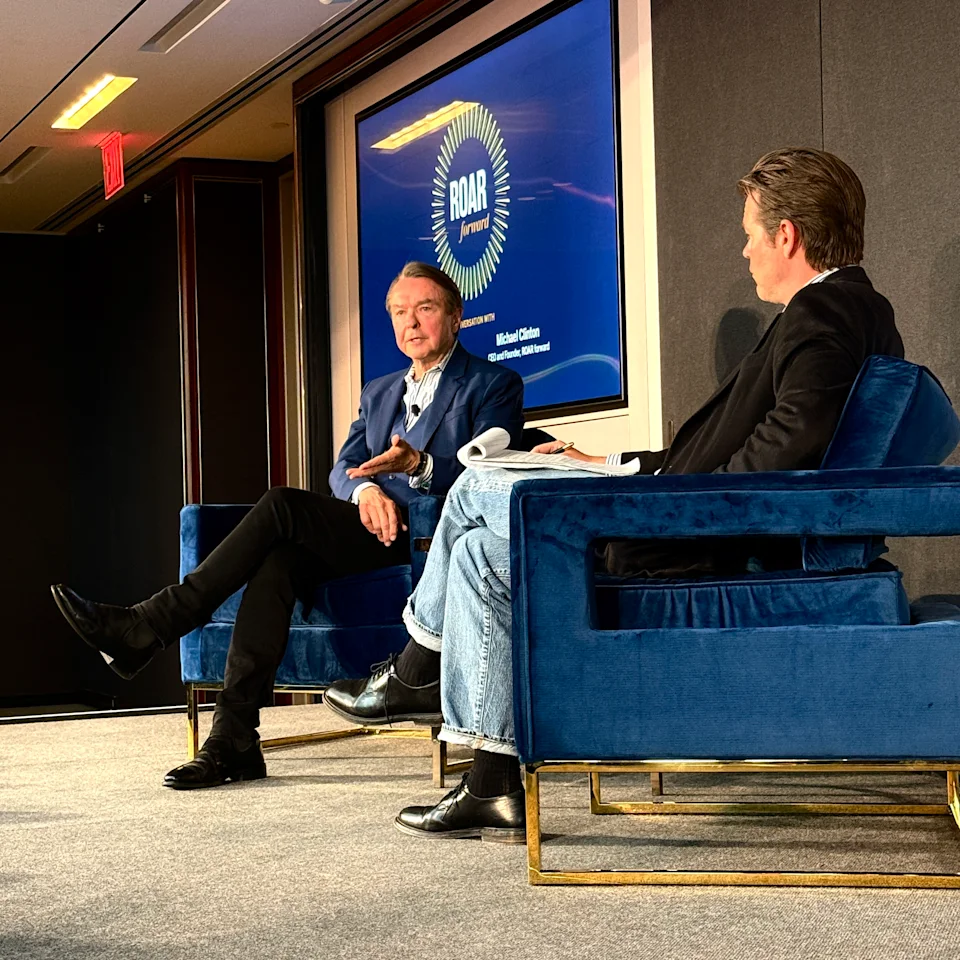
I sat down with Clinton, the former president and publishing director of Hearst Magazines, to discuss the challenges ahead and what it means for our careers and retirement right now.
Here are edited excerpts from our recent conversation.
Kerry Hannon: How is retirement an antiquated idea?
Michael Clinton: It was a construct created a hundred years ago by governments. And prior to that period, people basically worked until they died, because life expectancy was only 62. As the 20th century moved along and life expectancy grew, we had this whole sort of retirement industrial complex created by government, business, and developers, who all tapped into this idea of living out your post-work years having fun playing golf, being in the sun. But life expectancy has grown so much that it has turned the whole retirement concept on its head.
What is the new longevity movement?
It’s this idea that if you’re 60 and healthy, you will live potentially another 30 or 40 years, which creates an entirely new life cycle that previous generations never knew. At 60, you can start a new career for 10 or 20 years if you choose to. You can become an entrepreneur. You can go back to school. You can start a creative life and become a painter, writer, whatever. It’s this enormous gift of additional time. Someone might have two or three different careers. We’re on the cusp of an entirely new era.
Let’s talk about the 60-year career. How do you see that playing out?
The millennials will have a bit of that, but Gen Z and those who follow will really manifest this six-decade career. Many studies have predicted that today’s five-year-old has a 50% chance of living to be a hundred. People won’t have one linear career like previous generations did. That is dissolving right in front of us. They will end up having multiple careers, which may mean lateral moves. It may mean moving into new disciplines. It may mean a two- or three-year pause, and then going back to the workforce. Companies and organizations are going to have to restructure around this changing approach to careers.
What needs to happen at the workplace level?
Most companies are way behind this. But it’s simple demographics. There won’t be as many young workers coming along to replace those who are growing older and want to keep working to finance those extra years of living. L’Oréal’s always my great poster child with their L’Oréal for All Generations program. The focus is on moving people around to different divisions to gather different skills to help them continue long careers with the company.
Around the world, many new models are emerging, from returnships to fractional work. C-suite leadership has to break it all down and rebuild it. But if they want to retain talent, especially with the next generations, they’ll need different components of flexibility, work style, and skill-building by supporting lifelong learning for the journey.

What role will senior entrepreneurship play in the longevity movement?
There’s a bit of a rebellion with people as they move into their 50s and realize they may have 30 or more years ahead. If they work in a traditional company, they kind of hear the drums beating. Am I not going to get promoted? Am I not going to get further training? Is my company forcing me into a glide path of “traditional retirement”?
What’s happening is that a lot of people are saying, “Gee, you know, I have the knowledge. I have contacts. I have the access to resources, or my own resources. I’m going to step out and become an entrepreneur and launch my own thing” — usually a microbusiness.
It might be tied into a passion, a hobby, or it might be tied into a newfound thing that you learned along the way. Doing your own thing is liberating. It’s exciting. It’s a new start. And the data shows that older entrepreneurs tend to have higher success rates and longer run rates on their business than start-ups from younger generations because of all of their experience and knowledge.
Long-term learning will be critical for all workers, correct?
Universities are going to have to rethink their model. They’re already on the enrollment cliff with fewer young people entering their doors. The great universities are starting to pivot their curriculum. They are targeting the midlife person with not just degree programs, but certificate programs and other avenues to help people either reposition in a new career and/or run parallel to something they might want to do. They’re creating learning centers to help people regroup and reimagine for the second half. You will see more of those in the next several years at affordable prices.

What role does creativity play in longer lifespans?
When we participate in the arts, it is great for our brain health because it makes us think in more complex ways. It’s also a community because you’re there. It’s fun. You’re enjoying yourself. And it creates endorphins. We can do it until our very last day. There’s no timestamp on it.
What are some of the growth areas for investors to ride the longevity wave?
Most of the emerging longevity investments and longevity technologies are through private equity right now. We are at the dawn of the major AI era, and that is going to play a very significant role in the longevity discussion. It’s going to be the convergence of medicine, technology, and AI. The AI applications toward longevity will be a big go-go growth area.
There will be the continuation of the emergence of precision medicine and new classes of drugs for better, longer lives. These are all part of the longevity sector, and they’ll all be fueled and enabled by AI companies. That’s where the action will be.
